0:00
The Scratching In the Walls
There is a unique challenge in trying to prove that something is not there.
Imagine sitting in your kitchen drinking coffee when you hear scratching in the wall. You ignore it and return to your coffee. Then you hear it again. It sounds like a mouse. You pause, listen, and sure enough, there it is: a faint scurrying sound somewhere nearby.
You want to make sure you are doing the right thing. Mice can be a problem. So you get up and look around. You check under the table. You look behind the trash can. You open the cabinets and drawers. Nothing.
But you know what you heard.
So you keep looking. You pull out the refrigerator. You move the dishwasher. You empty the cupboards. Still nothing. The scratching seems real, but the mouse is nowhere to be found.
Determined to get to the bottom of it, you go further. You cut into the sheetrock. You inspect the framing. You open electrical boxes. You pull down ceiling panels. You crawl through the attic. After all of that, you finally feel satisfied: there probably was not a mouse in the kitchen wall.
Then you hear the scratching again. But now the kitchen is torn apart, and there is nowhere else to look.
When the Search Becomes the Problem
That is one of the problems we can encounter in medicine. Sometimes the pursuit of certainty becomes destructive. It can lead us down a long path that does not always produce an answer. In some cases, it becomes a loop, with repeated consultations, repeated testing, and repeated attempts to explain symptoms that remain unchanged.
A patient may have pain, weakness, stiffness, or another symptom that is real and frustrating but not disabling. It may be manageable with simple, low-risk treatment.
Modern medicine gives us powerful tools to investigate those symptoms. We can order X-rays, ultrasounds, MRIs, CT scans, nerve studies, diagnostic injections, and sometimes even diagnostic surgery.
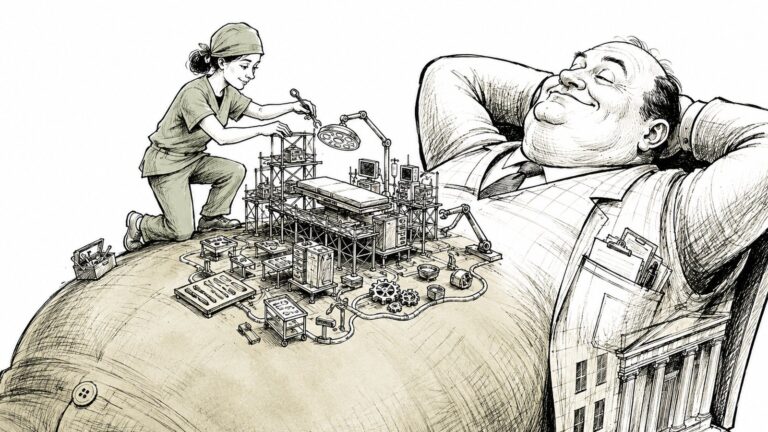
Those tools are valuable. They can uncover important problems, guide treatment, and prevent missed diagnoses. But they also have limits. Every additional step carries a cost, whether financial, emotional, physical, or practical. Sometimes the search itself leads to more testing, more procedures, more uncertainty, and even treatment directed at the wrong problem.
The Lesson of Ulysses Syndrome
Medicine has described versions of this phenomenon before. One example is Ulysses syndrome, first described by Mercer Rang in 1972. In this pattern, a patient embarks on a long medical journey after an abnormal, misleading, or low-value test result. One test leads to another. One referral leads to the next. The patient moves through labs, imaging studies, procedures, and consultations, only to end up where they started: without a clearer answer and sometimes only with proof that they never had the condition being pursued.
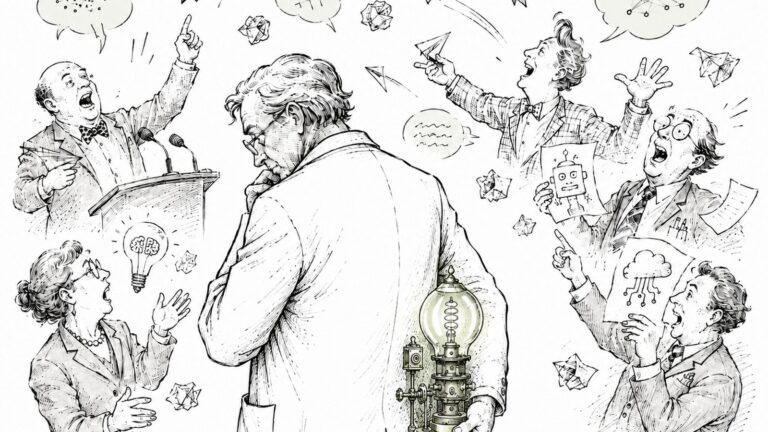
As physicians tasked with diagnosis, there is a natural temptation to follow every lead and explore every possibility.
Sometimes a test changes everything. It identifies a dangerous diagnosis, clarifies the source of pain, or points toward a treatment that would not otherwise be offered. In those situations, testing is clearly worthwhile.
But sometimes the next test does not change the destination. The patient will receive the same treatment whether the result is positive or negative. The same observation period, therapy, activity modification, medication, or reassurance may follow either outcome.
In those situations, the test may be serving a different purpose. It may be less about changing treatment and more about reducing anxiety, proving that nothing is there, or trying to create certainty where medicine can only offer probability.
Why Restraint Is Sometimes Better Care
For patients, the challenge is often different. When further testing is not recommended, it can feel as though their symptoms are being dismissed or not taken seriously. They may move from one provider to another, sometimes seeing multiple specialists, hoping that the next consultation will finally produce a definitive answer. Yet additional testing does not always bring clarity or relief.
Restraint on the part of the physician does not mean the symptom is imaginary. It does not mean the patient is exaggerating. It does not mean the doctor does not believe them. It means that every diagnostic step should earn its place. Good medical decision-making is not about ignoring symptoms. It is about weighing probability, risk, and consequence.
A physician has to ask: What is the most likely diagnosis? What dangerous or urgent diagnoses need to be ruled out? What would change if we found something unusual? What are the risks of continuing to search? And what are the risks of waiting, watching, and treating the most likely problem first?
Not Tearing Apart the Kitchen
Often, the best approach is not to tear the whole kitchen apart on day one. It may be better to start with the most likely explanation, treat it thoughtfully, and watch how the body responds. Over time, the diagnosis may become clearer. If symptoms change, fail to improve, or begin pointing toward something more serious, then the next diagnostic step may become appropriate.
This can be difficult for patients because restraint can feel like dismissal. If the doctor does not order the next test, it may seem as though they are not listening or are no longer interested in finding the answer. But that is not usually the case. Sometimes the decision not to pursue every possibility is itself a form of care.
The goal is not to stop looking for answers. The goal is to pursue answers in a way that meaningfully affects treatment or uncovers findings that can improve a patient’s outcome.
Because medicine is not measured by how many tests we order or how aggressively we search. It is measured by whether our decisions improve the lives of the people we care for.
Sometimes the most responsible choice is to investigate further. Sometimes it is to wait, reassess, and let time provide information that no scan or procedure can reveal. Wisdom lies in knowing the difference.
The challenge is not simply finding the mouse. It is recognizing when the pursuit of the mouse is causing more harm than the mouse ever could. When a careful evaluation has ruled out the dangerous possibilities and the next step is unlikely to change treatment, continuing the search may offer little benefit while exposing patients to real costs and risks.
Good care requires curiosity, but it also requires discipline. The best physicians know when to keep digging and when to stop tearing through the walls. And sometimes the highest standard of care is having the confidence to say: we have looked carefully, we have considered the important possibilities, and for now, the wisest course is not another test, but thoughtful observation and treatment.